Frequently Asked Questions
How do I get started?
You can start by scheduling a consultation by clicking on the button below. Fill this out and we will contact you as soon as possible. Then, we’ll talk through what’s going on and help you decide next steps.
How long does therapy take?
It depends on your needs and goals. Some people come for short-term support, while others benefit from longer-term work.
Do you offer virtual or in-person sessions?
We offer both virtual services throughout California or in-person sessions in Irvine, CA.
Do you accept insurance?
We don’t work directly with insurance companies, which means that payment for services is due at the time of your visit. If you have an HMO and prefer not to pay out of pocket, we recommend finding a provider within your network.
If you have a PPO plan, you’ll also pay for services upfront. However, most PPO plans will cover a portion of the cost for out-of-network care. If you choose to use your PPO benefits, we have partnered with Mentaya to help with the process. Please see our Mentaya page for more information.
Why don't you accept insurance?
It’s a really fair question and one many clients wonder about. There are several reasons why we choose not to accept insurance, and most of them come down to protecting your privacy, your care, and the quality of the work we are doing together.
1. More privacy and control over your care
When using insurance, therapists are required to give a mental health diagnosis and share certain details about your treatment with the insurance company. Private pay allows your therapy to stay more confidential and centered on your experience—without needing to fit into a medical model or justify care to a third party.
2. Freedom from strict limitations
Insurance companies often place limits on the number of sessions, types of therapy, or length of treatment. Without those restrictions, your therapist can tailor the work to your needs—whether that means moving at your pace, integrating different approaches, or continuing care as long as it’s helpful.
3. Higher quality, more personalized care
Insurance reimbursement rates are often lower, which can lead therapists to carry very high caseloads to sustain their practice. By working privately, therapists are often able to see fewer clients and offer more presence, preparation, and individualized attention in each session.
4. Flexibility in how therapy looks
Private pay allows for more flexibility in session length, frequency, and types of support (like parent coaching, consultations, or extended sessions), which aren’t always covered by insurance.
5. Reduced administrative burden
Working with insurance involves significant paperwork, billing complexities, and potential delays or denials of payment. By not accepting insurance, therapists can spend more of their time and energy focusing on client care rather than administrative tasks.
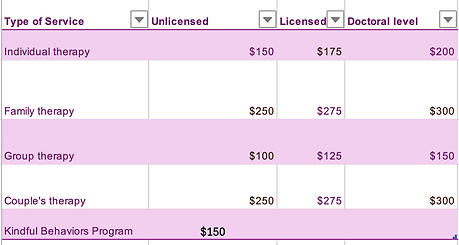
What are your fees?
Our fees depend on the type of therapist and service. Please see below for a table of fees.